If you manage a fleet, supervise CDL drivers, or oversee any DOT-regulated workforce in Colorado, breath alcohol testing is not optional, and getting it wrong carries real consequences. A missed post-accident test, an improperly calibrated device, or a failed chain of custody can turn a manageable situation into a federal compliance violation.
This guide explains exactly how DOT breath alcohol testing works, when it’s required, what the testing process looks like, and how Colorado employers can access reliable services statewide, including in areas where standard testing infrastructure is limited.
Key Takeaways
- DOT breath alcohol testing is federally mandated for safety-sensitive employees across multiple industries, with FMCSA/trucking carrying the highest volume requirements
- Alcohol testing must be conducted using NHTSA-approved devices operated by a certified Breath Alcohol Technician (BAT)
- Colorado employers in rural or underserved regions have options beyond clinic-based testing, including mobile and on-site collection
- Post-accident alcohol testing must begin as soon as practicable after a qualifying accident. The employer and TPA should exhaust all available options within the 8-hour window. If testing cannot be completed, every attempt made and every barrier encountered must be documented.
- Working with a qualified TPA removes the administrative burden and ensures your program stays compliant regardless of where your employees are located
What DOT Breath Alcohol Testing Actually Requires
DOT breath alcohol testing is governed by 49 CFR Part 40, which establishes procedural standards for conducting tests, specifies the equipment to be used, and outlines how results are handled. It applies to all DOT-regulated employers, including those under the authority of the FMCSA, FAA, FTA, FRA, PHMSA, and USCG.
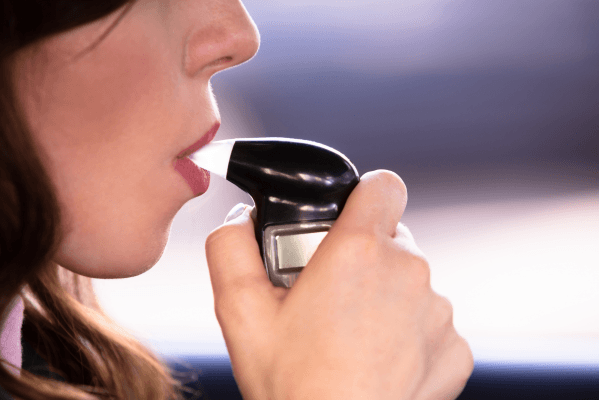
For a test to be DOT-compliant, it must be administered by a certified Breath Alcohol Technician using an evidential breath testing (EBT) device listed on the NHTSA Conforming Products List. The two-step confirmation process, consisting of a screening test followed by a confirmation test if the screening result is 0.02 or higher, is mandatory. Results below 0.02 are negative. Results between 0.02 and 0.039 trigger removal from safety-sensitive duty for a 24-hour period. Results at 0.04 or above are a violation requiring immediate removal from safety-sensitive functions and entry into the return-to-duty process.
The employer is responsible for ensuring that testing is conducted correctly, not just that it happens. Using an uncertified collector, an unapproved device, or failing to follow Part 40 procedures can invalidate results and expose your company during a DOT audit.
When Breath Alcohol Testing Is Required
DOT regulations permit alcohol testing in five specific circumstances for safety-sensitive employees.
Pre-employment testing for alcohol is permitted but not required under all DOT modes. Some employers find it useful as a screening mechanism. The employer’s decision to implement must be consistently applied for all applicants.
Random testing is required. FMCSA currently mandates a 10% random alcohol testing rate annually across your covered driver pool. Selections must be truly random, spread throughout the year, and conducted with as little advance notice as possible.
Post-accident testing is time-critical and requires immediate action. For FMCSA-regulated employers, alcohol testing must begin as soon as practicable following a qualifying accident. The 8-hour window is not a deadline to work toward. It is the outer limit of a period during which the employer and TPA should be actively exhausting all available options to complete the test. If testing genuinely cannot be completed within 8 hours due to circumstances such as an employee receiving emergency medical care, the employer must document every attempt made, every resource contacted, and every barrier encountered. That documentation is what protects you during a DOT audit. An undocumented failure to test is treated as a program deficiency regardless of the circumstances.
Reasonable suspicion testing is required when a trained supervisor observes specific, contemporaneous signs of alcohol use. The supervisor must be trained to DOT standards, and that training must be documented. Once the determination is made, testing should proceed immediately, with the same urgency, as delays in post-accident testing work against the employer, as alcohol metabolises quickly and a delayed test loses evidentiary value.
Return-to-duty and follow-up testing apply to any employee who has violated DOT alcohol standards and is re-entering safety-sensitive work following a Substance Abuse Professional evaluation. The SAP determines which testing is applicable for both return-to-duty testing and follow-up Testing. The return-to-duty test must be directly observed and must produce a result below 0.02.
Understanding the 0.02 vs. 0.04 Threshold: What Each Result Actually Means
This is one of the most common points of confusion for employers managing DOT alcohol programs, and getting it wrong leads to either under-reaction or unnecessary terminations.
A result between 0.02 and 0.039 is not a federal violation. It triggers a removal from safety-sensitive duty for a minimum of 24 hours, but it does not enter the FMCSA Clearinghouse, does not require a Substance Abuse Professional evaluation, and does not initiate the return-to-duty process. The employee simply cannot perform safety-sensitive functions until the next shift. Employers may choose to take employment action at this level, but only if their policy is stricter than the federal regulations.
A result of 0.04 or above is a federal violation. It triggers immediate removal from duty, a mandatory SAP evaluation, entry into the FMCSA Clearinghouse, and a full return-to-duty process before the employee can resume safety-sensitive work. The minimum follow-up testing requirement after RTD clearance is 6 tests within the first 12 months, and the SAP can extend the program for up to 5 years.
Employers who treat a 0.02 removal the same as a 0.04 violation, or vice versa, create documentation problems that become audit problems.
Non-DOT Breath Alcohol Testing: Different Rules, Same Stakes
Not every Colorado employer is DOT-regulated, but many still have legitimate reasons to conduct breath alcohol testing, including construction, manufacturing, healthcare, and any workplace where impairment creates safety risk.
Non-DOT breath alcohol testing follows the same general procedural framework as DOT testing if administered properly. PROCOM applies DOT protocols to all non-DOT collections as standard practice. Some providers use shortcuts for non-DOT tests, which can create problems if results are ever challenged or if the employer is later audited.
For all drug/alcohol testing programs, test results are classified as HR records, not medical records, and are not subject to HIPAA. Employers should store them securely, like all other employment records, but there is no federal requirement governing the transmission or storage of results.
Finding Reliable DOT Breath Alcohol Testing in Colorado
Colorado presents unique logistical challenges for alcohol testing. While the Front Range has strong collection site coverage, the eastern third of the state is significantly underserved, and rural mountain communities face additional barriers, including weather, pass closures, and the absence of BAT equipment at many local facilities.
If you’ve searched for breath alcohol testing near me and come up empty, or found results that serve individual consumers rather than regulated employers, you are not alone. This is a real gap in the Colorado testing landscape.
PROCOM addresses this in two ways. First, through mobile DOT drug testing and on-site testing services that bring certified collection directly to your location. Second, through a network of trained local collectors in underserved regions who can conduct oral fluid alcohol screening where BAT devices are not available, allowing employers to complete random, post-accident, and reasonable suspicion tests without requiring employees to travel long distances.
For employers in remote areas, PROCOM also trains employer representatives to conduct on-site alcohol screenings. This reduces the overall cost of your testing program and provides maximum flexibility when time-sensitive testing is required. Trained employer representatives use simple disposable saliva kits to quickly obtain negative alcohol results, meaning you do not need to purchase or maintain an expensive BAT machine. PROCOM supplies the kits and provides the training for both alcohol screening and drug screening collections.
Multi-location employers can search available collection sites by zip code through PROCOM’s online portal, selecting the most practical option based on hours, services, and proximity.
The Post-Accident Window: Why Speed and Documentation Both Matter
Post-accident breath alcohol testing is where employers most frequently make costly mistakes, and the most common misconception is treating the 8-hour window as a deadline rather than a requirement for urgency.
The DOT requires testing to begin as soon as practicable after a qualifying accident. Throughout the 8-hour period, the employer and TPA should actively pursue every available option to complete the test, including contacting collection sites, arranging mobile testing, coordinating with local collectors, and escalating if standard options are unavailable. A test completed at hour seven is far better than a documented failure, and in most cases, completion is possible if the right resources are engaged immediately.
In genuine extenuating circumstances, such as an employee who is receiving emergency medical care in intensive care following the accident, completion may not be possible. In those cases, the employer must document every specific attempt made, every resource contacted, the conditions encountered, and the precise reasons testing could not be completed. That documentation is what protects you during a DOT audit. An undocumented failure to test is treated as a program deficiency, regardless of the circumstances.
A qualified TPA should be immediately reachable when a post-accident situation occurs, not routing you through a ticketing queue or an after-hours voicemail. PROCOM’s team is directly accessible by phone and can help coordinate collection, identify local options, and assist with real-time documentation if a legitimate delay is encountered.
Managing Your Alcohol Testing Program Long-Term
Random alcohol testing is not something most employers can manage efficiently on their own, particularly small-to-mid-size fleets. Selections need to be truly random, distributed quarterly, and well-documented. Miss a quarter, select the wrong percentage, or fail to test a selected driver before they return to duty, and you have a compliance gap.
Enrolling in a DOT consortium allows smaller employers to pool their drivers into a shared random testing pool, bringing the program closer to FMCSA minimums without requiring employers to manage the selection process independently. PROCOM conducts quarterly selections and sends employer notifications at the start of each quarter, with flexibility on when within the quarter the selected driver is notified.
Seasonal employers face an additional consideration: any driver who has not been enrolled in a testing program within the last 30 days requires a new pre-employment test before returning to safety-sensitive work, even if they were previously enrolled.
Breath Alcohol Testing in Rural Colorado: What Happens When There Is No BAT Machine Nearby
Standard DOT breath alcohol testing requires an evidential breath testing device operated by a certified BAT. In much of Colorado, particularly the eastern plains and remote mountain communities, those devices simply are not available at local collection sites.
This creates a real problem for employers in those regions, especially when time-sensitive testing, such as post-accident or reasonable suspicion testing, is required.
PROCOM addresses this through a network of trained local collectors equipped to conduct oral fluid alcohol screening in areas where BAT machines are unavailable. This method allows employers to conduct random, post-accident, and reasonable-suspicion alcohol tests without requiring drivers to travel for hours to a Front Range facility. For safety-sensitive industries operating across Colorado’s less-served regions, this coverage is not a minor convenience. It is often the difference between completing a required test and documenting a failed attempt.
If your drivers operate in the western slope, mountain corridor, or eastern Colorado territory, it is worth confirming that your TPA can actually reach them before you need an urgent test.
Work With a Colorado TPA That Can Reach Your Drivers
DOT breath alcohol testing should not be managed reactively. A missed test, a documentation gap, or a delayed post-accident collection can create compliance exposure that persists for years beyond the original incident.
PROCOM’s team of test administrators works directly with Colorado employers across every industry and region, including areas with limited standard testing infrastructure. There are no ticketing queues, no automated systems to navigate, and no waiting until Monday morning when a post-accident situation happens on a Friday night.
Frequently Asked Questions
The federal limit for safety-sensitive DOT employees is a blood alcohol concentration of 0.04 or above, which constitutes a violation. A result of 0.02 to 0.039 requires removal from duty for 24 hours, but is not recorded as a violation. Results below 0.02 are negative.
Yes, but a refusal is treated as a positive test result under DOT regulations. Employees must complete the test, or it is recorded as a refusal and handled accordingly, including removal from safety-sensitive duty and entry into the return-to-duty process.
No. DOT testing operates under federal authority and is entirely separate from Colorado state law. The same federal standards apply regardless of whether a state has legalized any substance.
For alcohol, testing efforts must cease after 8 hours. The employer must document all attempts made and the reasons testing was not completed. This documentation is essential for audit protection and should be retained with the employee’s testing records.
There is no federal mandate for non-DOT employers, but many industries with safety-sensitive roles voluntarily implement programs. If you operate in construction, manufacturing, or any environment where impairment creates risk, a non-DOT alcohol testing policy is worth considering.
No. The City of Boulder’s ordinance prohibiting random drug and alcohol testing applies only to non-federally regulated employers operating within city limits. DOT-regulated employers, including those with CDL drivers or any safety-sensitive workforce covered by FMCSA, FAA, FTA, FRA, or PHMSA, are governed by federal law and are not subject to local restrictions. If your company operates across multiple Colorado jurisdictions, it is worth understanding which locations are subject to local ordinances for your non-DOT testing program, while keeping your DOT program on its standard federal framework.
The DOT does not make exceptions for weather, but it does require documentation of good-faith efforts. If a qualifying accident occurs in a location where collection is delayed by a pass closure, a snowstorm, or a lack of nearby facilities, the employer must document every attempt made, who was contacted, the conditions, and why testing could not be completed within the required window. That documentation is your protection during an audit. A post-accident situation in which no test occurred and no documentation exists is treated as a program failure regardless of the circumstances. Working with a TPA that has rural coverage and is immediately reachable after an incident makes the documentation process significantly easier.
In most cases, PROCOM handles testing from authorization through result delivery without involving the employer at all. The two situations that require direct employer contact are when an employee refuses to test, which is treated as a positive result, and when an employee produces a positive breath alcohol result. In both cases, PROCOM contacts the Designated Employer Representative directly and notifies them of the situation. Outside of those two scenarios, employers are kept informed through the portal and receive results as they come through, without needing to intervene in the process.
If you’re ready to build a compliant alcohol testing program or need a more responsive TPA partner, contact PROCOM to get started, or visit our offices in Glenwood Springs, Grand Junction, and Pueblo, which serve employers throughout Colorado.
Related Services: DOT Drug & Alcohol Testing | Breath Alcohol Screening | On-Site Testing | View All Services
Legal Disclaimer: The information in this post is provided for general informational purposes only and does not constitute legal, regulatory, or compliance advice. DOT regulations are subject to change. Employers should consult with a qualified compliance professional or legal counsel to ensure their drug and alcohol testing programs meet all applicable federal and state requirements.