If you manage a DOT-regulated workforce, you have likely seen the term “5-panel drug test” on paperwork, lab reports, or compliance documentation. What that label doesn’t tell you is which substances are actually being tested, how the panel is structured, or why the federal government requires it in the first place.
This guide breaks down exactly what the DOT drug testing panel screens for, how the testing process works from collection through result, and how the federal panel differs from the expanded or custom panels some employers use for non-DOT programs.
Key Takeaways
- The DOT 5-panel tests for five drug groups, not five individual substances. Each group covers multiple discrete compounds.
- The panel is standardized under 49 CFR Part 40 and cannot be modified by employers or TPAs for DOT-regulated testing.
- A confirmed positive result must be reviewed by a Medical Review Officer before the employer is notified.
- Non-DOT employers can use the federal panel as a baseline, expand it, or build an entirely custom panel based on their industry and risk profile.
- All DOT urine tests include specimen validity testing to detect adulteration or substitution, confirming the sample is genuine before results are reported.
What the DOT 5-Panel Actually Tests For
The DOT drug testing panel is defined by the Department of Transportation under 49 CFR Part 40 and the associated DOT agency guidelines. It screens for five drug groups, each of which covers multiple individual substances.
Marijuana (THC metabolites) – The panel tests for tetrahydrocannabinol carboxylic acid (THCA), the primary metabolite produced when the body processes THC. Detection windows vary depending on frequency of use, body composition, and other factors, but can range from a few days for occasional users to several weeks for heavy users. Colorado’s marijuana legalization has no bearing on DOT testing. Federal standards apply regardless of state law.
Cocaine (Cocaine metabolites) – The panel tests for benzoylecgonine, the primary metabolite of cocaine. Detection windows are typically 2 to 4 days for urine testing.
Amphetamines – This group covers amphetamine, methamphetamine, MDMA (ecstasy), and MDA. The breadth of this group is one reason why prescription medications matter during the MRO review process. Legitimate prescriptions for ADHD medications, for example, can explain an amphetamine result, and the MRO evaluation exists to distinguish between the two.
Opioids – This is the most expensive group on the panel. It covers codeine, morphine, heroin (as 6-acetylmorphine), hydrocodone, hydromorphone, oxycodone, and oxymorphone. The addition of semi-synthetic opioids to the federal panel reflects the broader opioid crisis and the prevalence of prescription opioid misuse in safety-sensitive industries.
Phencyclidine (PCP) – PCP is included for its severe impairment effects in safety-sensitive roles. It has a longer detection window than most other substances on the panel, typically 7 to 14 days for occasional use.
Based on field experience, a few patterns are worth understanding. Amphetamine positives appear more frequently among workers on irregular or extended shifts, night shift operators, long-haul drivers, and snowplow operators — where stimulant use is linked to attempts to stay alert. THC positives remain elevated in states where marijuana is legal, despite federal requirements still applying to DOT employees. PCP positives are rare. Semi-synthetic opioids were added to the panel in 2018, and in the period immediately following, a significant number of individuals tested positive without valid medical documentation, suggesting widespread prescription opioid misuse, a rate that has diminished over time.
What “W/TS” Means on a DOT Drug Test
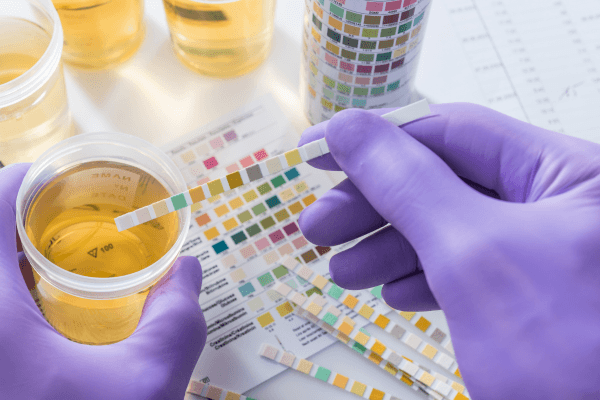
Specimen validity testing is conducted alongside every DOT urine drug screen. Its primary purpose is to confirm that the sample is genuine urine rather than a synthetic substitute or adulterated specimen.
Validity testing checks whether the urine specimen meets the physical and chemical criteria required for a valid test. Specifically, it checks for:
- Creatinine levels — to detect dilution or substitution
- pH levels — to detect adulteration
- Specific gravity — a secondary indicator of dilution or substitution
- Oxidizing agents — to detect the presence of adulterants added to mask drug use
A specimen that fails validity testing is reported as substituted, adulterated, or invalid rather than negative or positive. Each of those outcomes triggers a specific reporting and documentation process under Part 40. An invalid result, for example, typically requires the employer to send the employee for an immediate recollection under direct observation.
Validity testing is required for all DOT-regulated urine drug tests. It is not optional or an upgrade; it is built into the standard DOT collection process.
How the DOT Drug Testing Process Works
Understanding the panel is only part of the picture. The collection and result process is equally regulated and has specific procedural requirements that apply at every stage.
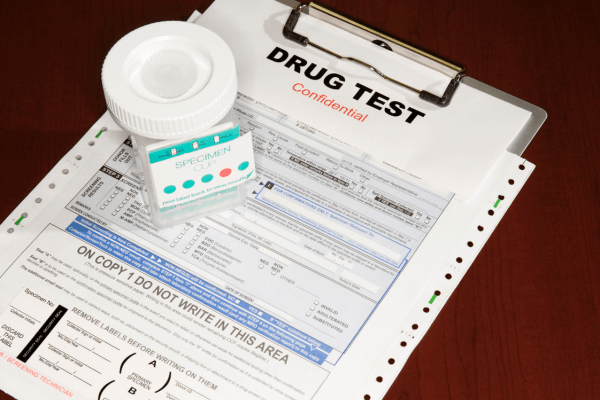
Collection: The donor reports to a collection site staffed by a certified Urine Drug Screen Collector. The collector verifies the donor’s identity, prepares the collection materials, and conducts the collection using a split specimen method. The urine sample is divided into two bottles: the primary specimen (Bottle A) and the split specimen (Bottle B). Both are sealed, documented on a federal chain-of-custody form (CCF), and shipped to a SAMHSA-certified laboratory.
Laboratory Analysis: The primary specimen is screened with an initial immunoassay. Any result at or above the federal cutoff concentration is confirmed by gas chromatography-mass spectrometry (GC-MS), a more precise method. The split specimen is stored and tested only if the donor requests a split-specimen retest following a positive result.
MRO Review: All laboratory results, whether positive, negative, invalid, substituted, or adulterated, are reported to the Medical Review Officer. For positive results, the MRO contacts the donor directly to determine whether a legitimate medical explanation exists. If the donor provides a valid prescription and the MRO verifies it, the result can be reported to the employer as negative. If no valid explanation exists, the result is reported as a verified positive.
The employer is notified only after the MRO has completed the review. This step is not optional and cannot be bypassed for DOT-regulated testing.
Beyond reviewing results, the MRO also verifies that the chain-of-custody paperwork has been completed correctly. Errors or omissions on the collection documentation can result in the MRO canceling the test or requesting additional documentation from the donor or collector before a result can be reported.
Result Reporting: A verified positive result triggers immediate removal from safety-sensitive duty, entry into the FMCSA Clearinghouse (for FMCSA-regulated employers), and mandatory referral to a Substance Abuse Professional.
For standard DOT 5-panel urine screens, PROCOM aims to deliver verified negative results by the next business day. Over 80% of tests meet that target. Shipping delays or collection errors can extend turnaround, and positive results take longer due to the MRO review process.
The DOT Panel vs. Non-DOT Panels: Key Differences
The DOT 5-panel is fixed. Employers regulated by FMCSA, FAA, FRA, FTA, PHMSA, or USCG cannot modify it, remove substances from it, or add substances to it for federally mandated testing. The panel, cutoff concentrations, and procedures are all set under 49 CFR Part 40.
Non-DOT employers have no such restriction. They can use the federal 5-panel as a baseline, expand it, or build an entirely different configuration based on their industry and workforce.
Common expansions for non-DOT programs include:
- Expanded opioids — adding fentanyl, tramadol, or buprenorphine for healthcare employers or those in industries with high opioid exposure
- Benzodiazepines — relevant for healthcare, transportation logistics, and employers managing populations with high rates of prescription sedative use
- Synthetic cannabinoids — for employers in federally contracted or high-security environments where standard THC testing is insufficient
- Barbiturates and propoxyphene — less common but used in specific healthcare and pharmaceutical contexts
- Methadone — relevant for drug rehabilitation facilities and healthcare settings managing opioid treatment programs
Non-DOT employers can also remove substances from the panel. The most common removal in Colorado is THC, for employers who do not enforce marijuana policies. As covered in our drug test cost guide, removing THC from a non-DOT panel means that positive results don’t trigger MRO intervention or secondary confirmation testing, reducing both turnaround time and downstream administrative costs.
Why the Federal Panel Is Structured the Way It Is
The DOT 5-panel reflects federal policy decisions about which substances pose the greatest safety risk in regulated industries, not a comprehensive list of everything an employer might want to screen for. PCP, for example, is rarely encountered in most workplaces, but its impairment profile in safety-sensitive roles justifies its inclusion. The opioid group was expanded significantly in 2018 to reflect the prevalence of prescription opioid misuse across transportation and energy sectors.
The federal cutoff concentrations are also set at specific levels to balance detection sensitivity against false positives from passive exposure or legal use of related compounds. Employers sometimes ask why a known heavy marijuana user tested negative; the answer is often that the result fell below the federal cutoff rather than that the test failed. The cutoffs are a policy decision, not a technical limitation.
Managing DOT Drug Testing for Your Program
If you manage a DOT-regulated workforce, your drug testing program must comply exactly with the federal panel requirements. There is no flexibility on panel configuration, collection procedures, or MRO review for DOT-mandated testing.
What you can control is how efficiently your program is managed — how selections are made, how collections are scheduled, how results are communicated, and how documentation is maintained when an audit arrives.
Frequently Asked Questions
The DOT 5-panel tests for five drug groups: marijuana (THC metabolites), cocaine metabolites, amphetamines (including methamphetamine and MDMA), opioids (including codeine, morphine, hydrocodone, hydromorphone, oxycodone, oxymorphone, and heroin), and phencyclidine (PCP). Each group covers multiple individual substances, so the panel tests for significantly more than five compounds in total.
No. The DOT panel is standardized under 49 CFR Part 40 and cannot be modified for federally mandated testing. Employers who want to test for additional substances must do so through a separate non-DOT testing program conducted in conjunction with the required DOT test.
A verified positive result requires immediate removal from safety-sensitive duties, referral to a Substance Abuse Professional, and entry into the FMCSA Clearinghouse for FMCSA-regulated programs. The employee cannot return to safety-sensitive work until completing the SAP evaluation and return-to-duty process, which includes a directly observed RTD test and a minimum of six follow-up tests in the first 12 months.
The donor has the right to request testing of the split specimen (Bottle B) at a second SAMHSA-certified laboratory. The request must be made within 72 hours of receiving notification of the positive result from the MRO. If the split-specimen test does not confirm the positive result, the result is canceled.
It depends on the substance and the prescription. The MRO will contact the employee directly to review any prescription documentation. If the MRO determines the prescription is valid and the medication is being taken as prescribed, the result may be reported as negative. However, a valid prescription does not automatically clear a positive result, and the MRO makes the final determination. Some prescribed substances may still disqualify an employee from performing safety-sensitive functions, regardless of the prescription’s validity.
The DOT panel is fixed by federal regulation and cannot be changed. Non-DOT panels can be configured by the employer and their TPA to match their industry, workforce, and risk profile. Non-DOT employers can add substances the DOT panel doesn’t include, remove substances the DOT panel doesn’t enforce, or build an entirely custom configuration. Panel setup through PROCOM is free for non-DOT programs.
PROCOM manages DOT drug testing programs for Colorado employers across every regulated industry, including coordination of collections, MRO services, Clearinghouse reporting, and ongoing random selection management. If you have questions about your current program or want to build one from scratch, contact PROCOM to get started.
Related Services: DOT Drug & Alcohol Testing | Consortium & TPA Services | Non-DOT Screening | View All Services