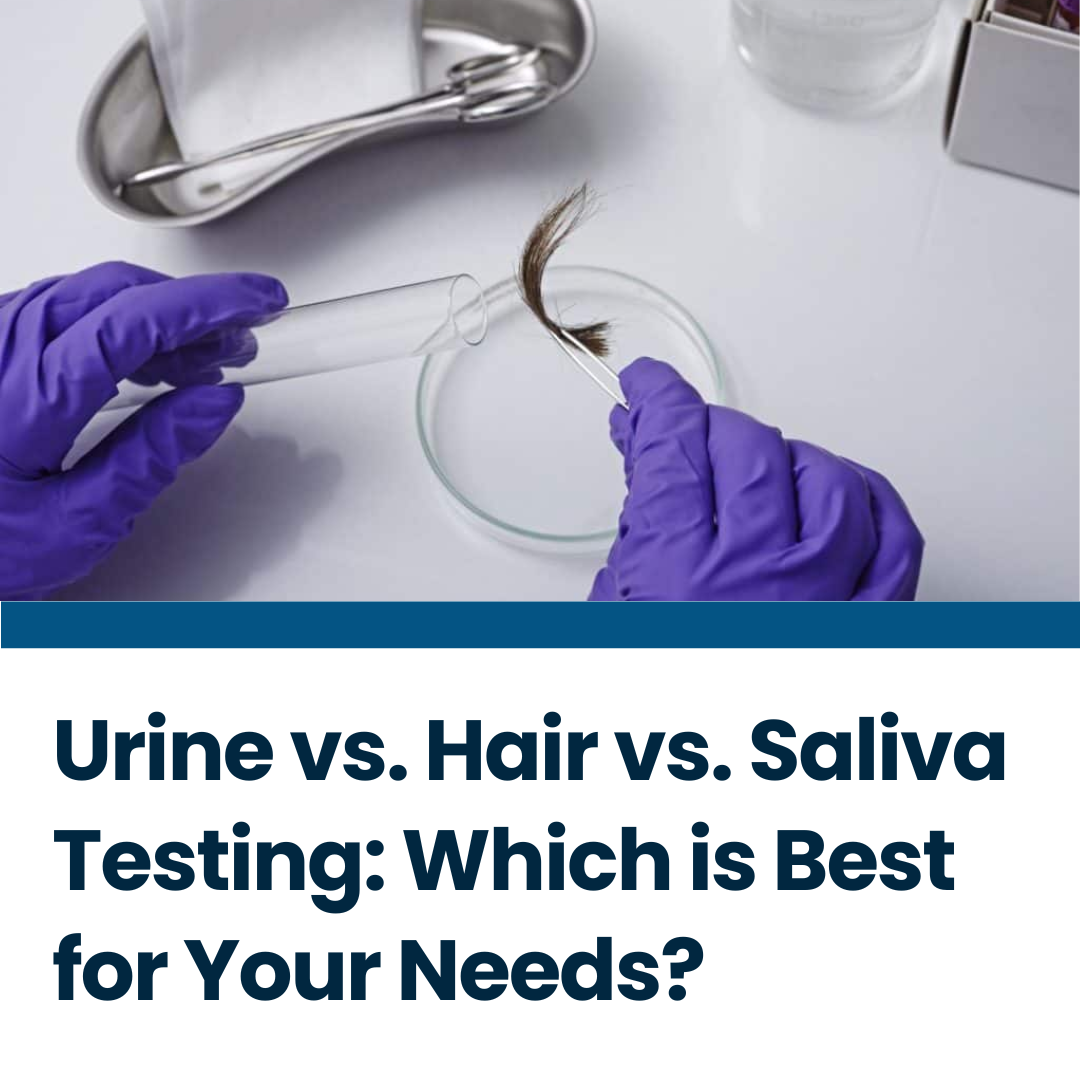
Choosing between urine, hair, and saliva drug testing comes down to what you need to detect, how far back, and under what conditions. This guide breaks down all three methods — including a detailed saliva drug test vs. urine comparison — so you can match the right test to your program.
How Urine, Hair, and Saliva Drug Tests Compare
| Factor | Urine Drug Test | Hair Drug Test | Saliva / Mouth Swab Drug Test |
|---|---|---|---|
| Detection Window | 1–3 days (THC up to 30 days) | Up to 90 days | 24–48 hours |
| Cost | Low | High | Moderate |
| Collection Ease | Moderate (requires restroom) | Moderate | Easy — no restroom needed |
| Tamper Resistance | Moderate | High | High |
| Recent Use Detection | Moderate | Poor (7-day lag) | Best |
| DOT Approved | ✅ Yes | ❌ No | ✅ Yes (oral fluid) |
| Best For | Pre-employment, random, DOT | Long-term history, legal cases | Post-accident, reasonable suspicion, on-site |
1. Urine Drug Testing: The Most Common Choice
How It Works:
Urine drug testing is the most widely used method due to its cost-effectiveness and broad detection capabilities. A urine sample is collected and analyzed for the presence of drug metabolites.
Pros:
✅ Detects recent drug use (typically within the past few days)
✅ Cost-effective and widely available
✅ Easy to administer with instant and lab-based options
✅ Approved by the Department of Transportation (DOT) and other regulatory bodies
Cons:
❌ Shorter detection window compared to hair testing
❌ Can be tampered with or adulterated
❌ Collection may feel invasive for some individuals
Best For:
✔ Pre-employment screenings
✔ Random workplace drug testing
✔ Legal and compliance requirements (e.g., DOT testing)
2. Hair Drug Testing: The Long-Term Detector
How It Works:
Hair follicle testing analyzes a small sample of hair, typically taken from the scalp, to detect drug use over an extended period—up to 90 days. The test identifies drug metabolites embedded in the hair shaft.
Pros:
✅ Longest detection window (up to 90 days)
✅ Difficult to cheat or tamper with
✅ Provides a more comprehensive view of drug history
Cons:
❌ More expensive than urine and saliva tests
❌ Does not detect very recent drug use (past 7 days or less)
❌ Requires a hair sample, which may not be possible for bald individuals
Best For:
✔ Legal cases (e.g., child custody, court orders)
✔ High-level employment screenings (e.g., executive hires)
✔ Monitoring long-term drug use patterns
3. Saliva (Oral Fluid) Drug Testing: The Quick and Non-Invasive Option
How It Works:
Saliva testing involves collecting a mouth swab sample to detect the presence of drugs. This method is ideal for detecting very recent drug use.
Pros:
✅ Non-invasive and easy to administer
✅ Detects recent drug use (within minutes to hours)
✅ Harder to cheat compared to urine tests
✅ Results are available quickly
Cons:
❌ Short detection window (typically 24–48 hours)
❌ Some substances may be harder to detect in saliva
❌ Not as widely accepted for legal or regulatory testing
Best For:
✔ Post-accident testing
✔ Reasonable suspicion testing
✔ Instant, on-site screenings
Saliva Drug Test vs. Urine: A Closer Look
Saliva Drug Test vs. Urine: A Closer Look
For many employers, the real decision isn’t whether to add hair testing — it’s choosing between a saliva drug test and a urine test for day-to-day workplace screening. Both are widely used, both are effective, and both are available through PROCOM. The difference comes down to what you’re trying to catch and when.
When a mouth swab drug test is the better choice:
A saliva drug test — also called an oral fluid or mouth swab drug test — is collected on the spot with no restroom required. The collector and donor stay in view throughout, which eliminates the adulteration and substitution risks that come with unobserved urine collection. Because parent drugs appear in oral fluid within minutes of use, saliva testing is the most reliable method for detecting whether someone is impaired right now. This makes it the preferred choice for post-accident testing and reasonable suspicion situations, where the question being asked is about recent use, not history.
When urine is the better choice:
Urine testing has a longer detection window and deeper regulatory history. It remains the only fully implemented specimen type for all DOT-regulated programs, and it carries decades of validated laboratory methods and legal precedent. For pre-employment screening, return-to-duty testing, random pools, and any program where regulatory compliance is the primary driver, urine is the established standard.
DOT and oral fluid testing:
It’s worth noting that DOT has authorized oral fluid as an alternative specimen type under 49 CFR Part 40. Implementation depends on HHS-certified laboratory availability, but the regulatory groundwork is in place. Employers in DOT-regulated industries should confirm current status with their C/TPA before switching to oral fluid for covered testing.
Key takeaways:
- Saliva drug test = best for recent-use detection, observed collection, and field or on-site situations where a restroom isn’t available
- Urine drug test = best for longer detection windows, pre-employment, return-to-duty, and DOT-regulated programs
- Match the specimen type to the question you’re trying to answer — recent impairment vs. historical use history
Not sure which method fits your program? Contact PROCOM for a free consultation, or learn more about our oral fluid testing services.
Frequently Asked Questions (FAQs)
1. Which drug test is the hardest to cheat?
Hair testing is the hardest to cheat because drug metabolites become embedded in the hair shaft and cannot be altered through washing or detox products. Saliva testing is also difficult to manipulate since it’s collected on the spot.
2. Can a drug test detect prescription medications?
Yes, standard drug panels can detect prescription medications such as opioids, benzodiazepines, and stimulants. If you have a valid prescription, you should inform the testing administrator.
3. How long do drugs stay in my system for each test type?
- Urine test: 1-3 days (longer for heavy use of substances like THC)
- Hair test: Up to 90 days
- Saliva test: 24-48 hours (varies based on substance)
4. Is hair testing more accurate than urine or saliva testing?
All methods are very accurate but they each answer different questions. Hair testing provides a longer detection window but does not detect very recent drug use. Urine and saliva tests are better for detecting recent use, making accuracy dependent on the timeframe in question.
5. Does secondhand smoke from marijuana cause a positive test result?
Unlikely. Passive exposure typically does not result in a positive test, especially in hair and urine testing. However, extreme exposure in a confined space might lead to trace levels in a saliva test.
6. What happens if I test positive on a drug test?
This depends on your employer’s policy or the reason for the test. Employers may require confirmation testing, offer rehabilitation options, or enforce disciplinary actions. For legal cases, further verification might be required.
7. How soon can I take a drug test after using a substance?
- Saliva test: Detects use within minutes to hours
- Urine test: Usually detects drugs within 1-3 hours after use
- Hair test: Requires at least 7 days for drug metabolites to appear in the hair shaft
8. Are at-home drug tests as reliable as lab-based tests?
At-home tests provide initial results but may lack the accuracy and confirmation of laboratory testing. Lab-based testing includes confirmatory analysis to rule out false positives. Furthermore, there is an important element of the testing process which is missing from at-home test kits – the MRO (Medical Review Officer) Review Process.
9. Can I refuse a drug test?
You can refuse, but consequences depend on the situation. In the workplace, refusal may result in disciplinary action. For most employers, and certainly DOT-regulated jobs, a refusal is treated the same as a positive test result.
10. Where can I get reliable drug testing services?
PROCOM offers certified, confidential drug testing for individuals and businesses. Contact us today to schedule a test!
Final Thoughts
Choosing the right drug test depends on your specific needs. If you need a cost-effective and widely accepted test, urine testing is the way to go. For detecting long-term drug use, hair testing is your best bet. If you need to detect very recent use, saliva testing offers the fastest results.
Need help selecting the right testing solution? Contact PROCOM today for expert advice and reliable drug testing services.