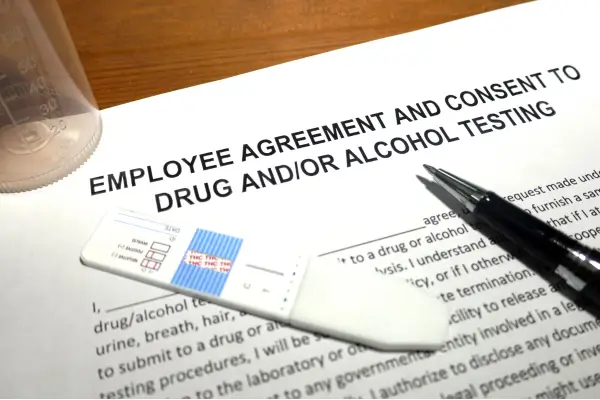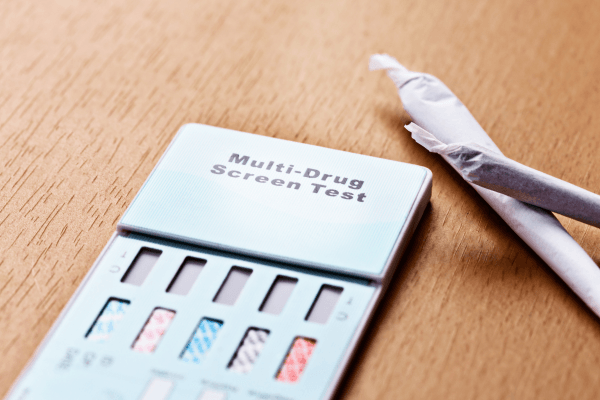
The 10-panel drug test is one of the most common configurations for employer-based screening, particularly in industries where the standard federal 5-panel doesn’t cover the full range of substances relevant to workplace safety. But the “10-panel” label doesn’t define a single fixed test; it refers to a panel covering 10 drug groups, and which 10 those are depends on how the panel is configured.
This guide covers the standard 10-panel configuration used in most employer programs, the detection windows and cutoff levels for each substance group, how the 10-panel compares to the DOT 5-panel, and the customization options available to non-DOT employers building or refining their testing programs.
Key Takeaways
- A standard 10-panel drug test covers the five federal DOT drug groups plus five additional substance categories commonly added for non-DOT workplace programs.
- The 10-panel is not federally mandated; it is used primarily by non-DOT employers who need broader coverage than the standard 5-panel provides.
- Detection windows vary significantly by substance, frequency of use, and testing method. Urine is the most common specimen type for 10-panel testing.
- Cutoff concentrations are set at the lab level and can vary between providers. Employers should confirm which cutoffs apply to their program.
- Non-DOT employers can modify a 10-panel configuration to add, remove, or substitute substances based on their industry’s actual risk profile.
The Standard 10-Panel Drug Test: What It Screens For
The standard employer 10-panel builds on the five groups tested in the federal DOT drug panel and adds five substance categories that address prescription drug misuse and other substances more common in specific industries. Here is what each group covers.
1. Marijuana (THC Metabolites)
The panel tests for tetrahydrocannabinol carboxylic acid (THCA), the primary metabolite produced when the body processes THC. Detection windows range from a few days for occasional users to several weeks for heavy or chronic users. Colorado’s marijuana legalization does not affect employer drug testing rights for safety-sensitive positions, and non-DOT employers retain broad discretion to enforce THC policies under state law.
Typical urine cutoff: 50 ng/mL (screening), 15 ng/mL (confirmation)
2. Cocaine (Cocaine Metabolites)
The panel screens for benzoylecgonine, the primary metabolite of cocaine. Detection windows for urine testing are generally 2 to 4 days.
Typical urine cutoff: 150 ng/mL (screening), 100 ng/mL (confirmation)
3. Amphetamines
This group covers amphetamine, methamphetamine, MDMA (ecstasy), and MDA. Prescription ADHD medications can produce positive amphetamine results, which is why MRO review matters for any program where results will be acted upon. Detection windows are typically 2 to 4 days.
Typical urine cutoff: 500 ng/mL (screening), 250 ng/mL (confirmation)
4. Opiates (Natural and Semi-Synthetic)
This group covers codeine, morphine, heroin (as 6-acetylmorphine), hydrocodone, hydromorphone, oxycodone, and oxymorphone. This is the most expansive group on the panel and reflects the range of both illicit opioid use and prescription opioid misuse relevant to most workplaces. Detection windows are typically 2 to 4 days.
Typical urine cutoff: 2000 ng/mL for morphine/codeine (screening); 300 ng/mL for semi-synthetics (screening); 10 ng/mL for heroin
5. Phencyclidine (PCP)
PCP is included for its severe impairment profile in safety-sensitive roles. It has a longer detection window than most other substances, typically 7 to 14 days for occasional use and up to 30 days for heavy use.
Typical urine cutoff: 25 ng/mL (screening), 25 ng/mL (confirmation)
6. Benzodiazepines
This is one of the five additions beyond the standard DOT panel. Benzodiazepines cover a wide range of prescription sedatives, including diazepam (Valium), alprazolam (Xanax), clonazepam (Klonopin), and lorazepam (Ativan). They are commonly included in 10-panel configurations for healthcare, transportation logistics, and any workplace where sedative impairment creates a safety risk. Detection windows vary by compound, typically 2 to 7 days, but can extend longer for chronic use.
Typical urine cutoff: 200 ng/mL (screening)
7. Barbiturates
Barbiturates include phenobarbital, butalbital, and secobarbital. While less common in general workplace programs, they are relevant for healthcare settings and industries where employees may have access to or exposure to sedative compounds. Detection windows range from 2 to 4 days for short-acting compounds to several weeks for phenobarbital.
Typical urine cutoff: 200 ng/mL (screening)
8. Methadone
Methadone is a synthetic opioid used in opioid treatment programs, which means it is particularly relevant for drug rehabilitation facilities, healthcare employers, and any workplace with employees who may be participating in medication-assisted treatment. It does not cross-react with standard opiate immunoassay tests, which is why it requires its own panel position. The detection window is typically 2 to 4 days.
Typical urine cutoff: 300 ng/mL (screening)
9. Propoxyphene
Propoxyphene (Darvon/Darvocet) was withdrawn from the US market in 2010, but it remains on many 10-panel configurations due to the widespread adoption of those panel templates. Employers working with a TPA should confirm whether this position still makes sense for their program or whether substituting a more relevant substance — such as fentanyl or tramadol — better reflects their actual risk profile.
Typical urine cutoff: 300 ng/mL (screening)
10. Methaqualone (Quaalude)
Methaqualone is similarly included in many 10-panel configurations. It has not been legally manufactured in the US since the 1980s. Like propoxyphene, its continued presence on many standard 10-panel templates is more a product of historical convention than current risk. Employers with a TPA can replace this position with a substance more relevant to their workforce.
Typical urine cutoff: 300 ng/mL (screening)
Detection Windows by Specimen Type
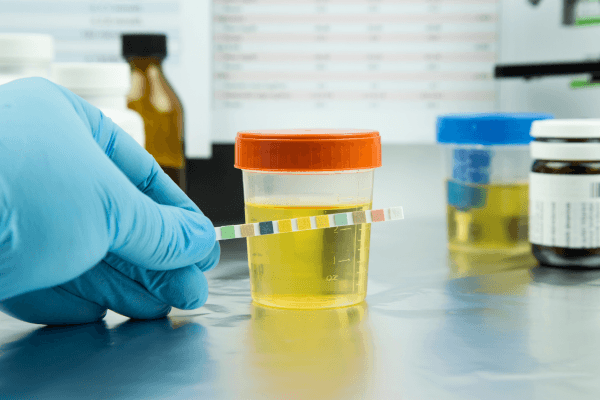
Urine is the most common specimen for 10-panel testing due to cost, availability, and the breadth of substances it can detect. Detection windows for urine reflect metabolite excretion, not active impairment.
| Substance Group | Urine Detection Window |
| THC (occasional use) | 3 to 7 days |
| THC (chronic use) | Up to 30 days |
| Cocaine | 2 to 4 days |
| Amphetamines | 2 to 4 days |
| Opiates | 2 to 4 days |
| PCP | 7 to 14 days (up to 30 for heavy use) |
| Benzodiazepines | 2 to 7 days (longer for chronic use) |
| Barbiturates | 2 to 4 days (up to several weeks for phenobarbital) |
| Methadone | 2 to 4 days |
Hair follicle testing provides a significantly longer detection window of approximately 90 days across all substance groups, making it useful for pre-employment screening in high-risk roles or situations where a longer use history is relevant. Hair testing costs more per collection and carries additional variables. When head hair is insufficient, body hair must be used, and many collection sites charge surcharges for body hair collections. Oral fluid testing provides a shorter window that more closely reflects recent use, typically 24 to 48 hours for most substances.
How the 10-Panel Differs from the DOT 5-Panel
The DOT 5-panel is federally mandated and fixed under 49 CFR Part 40. Employers regulated by FMCSA, FAA, FRA, FTA, PHMSA, or USCG cannot modify it. The 10-panel is a non-DOT configuration — it has no federal mandate and can be adjusted by the employer and their TPA.
The five additional groups on a standard 10-panel — benzodiazepines, barbiturates, methadone, propoxyphene, and methaqualone — address prescription drug misuse that the federal panel doesn’t capture. For employers in healthcare, oil and gas, construction, or any sector with elevated prescription drug exposure, the expanded coverage is often worth the marginal increase in per-test cost.
DOT-regulated employers who want to screen for substances beyond the federal panel must do so through a parallel non-DOT program. The DOT test and the supplemental test are conducted separately and documented separately.
Customizing a 10-Panel for Your Industry
The “10-panel” label should be treated as a starting point, not a finished product. Two of the standard ten positions — propoxyphene and methaqualone — cover substances that are largely absent from modern workplaces and may not reflect your actual risk profile. Replacing them with industry-relevant substances is straightforward and does not significantly change the cost structure.
Common substitutions and additions PROCOM configures for non-DOT employers include:
- Fentanyl — relevant for healthcare, emergency services, and any industry with documented fentanyl exposure risk. Adding fentanyl to a panel increases per-test cost significantly, which has been the primary deterrent to wider adoption.
- Tramadol — a widely prescribed opioid analgesic that does not appear on standard opiate screens
- Buprenorphine — one of the most common substitutions PROCOM configures, relevant for healthcare employers and drug rehabilitation facilities managing opioid treatment programs.
- Synthetic cannabinoids — for employers in federally contracted, high-security, or zero-tolerance environments where standard THC testing is insufficient
- Expanded amphetamines — adding specific compounds for healthcare or pharmaceutical environments
Panel configuration decisions are often shaped by geography and local law as much as industry. Employers in states where pre-employment THC testing is legally restricted will configure panels differently from those without those restrictions. PROCOM can advise on a configuration that reflects both your state’s legal environment and your actual workplace risk.
Panel setup through PROCOM’s non-DOT screening program is free, with a 1- to 2-week lead time if the configuration doesn’t already exist in the lab system. The per-test cost is determined once the panel is configured, since the lab sets pricing based on the specific substances included.
For employers with on-site or mobile testing needs, custom panel configurations are available through the same collection process. PROCOM coordinates the lab relationship, chain-of-custody documentation, and result reporting regardless of panel configuration.
Managing a 10-Panel Program Long-Term
For employers running random testing programs with a 10-panel configuration, the administrative considerations are the same as for any other workplace testing program: selections need to be documented, collections need to be scheduled with appropriate notice, and results need to be handled consistently and defensibly.
Employers who manage this process internally, coordinating with individual collection sites, tracking selection documentation, and handling MRO communication directly, consistently undercount the staff time involved. Working with a TPA removes that burden and ensures the program stays compliant as your workforce and risk profile evolve.
If an employee returns a positive result on a 10-panel test, the handling process depends on your company policy rather than federal regulation. Unlike DOT programs, there is no mandatory SAP referral or return-to-duty process required by law for non-DOT programs. However, having a clearly written policy that defines consequences, MRO review procedures, and re-testing protocols protects the employer if a result is ever disputed.
PROCOM configures and manages 10-panel programs for Colorado employers across every industry. Contact us to discuss your panel configuration, review your current program, or set up a company testing account.
Frequently Asked Questions
A 10-panel drug test screens for ten drug groups in a single specimen collection. The standard configuration covers the five groups included in the federal DOT panel: marijuana, cocaine, amphetamines, opiates, and PCP, plus five additional categories commonly associated with prescription drug misuse: benzodiazepines, barbiturates, methadone, propoxyphene, and methaqualone. Non-DOT employers can modify the configuration to better match their industry’s risk profile.
No. The DOT mandates a 5-panel configuration under 49 CFR Part 40 for federally regulated testing. The 10-panel is used by non-DOT employers who want broader substance coverage than the federal panel provides. DOT-regulated employers who want to screen for additional substances must run a separate non-DOT test alongside the required federal test.
Detection windows vary by substance and frequency of use. Most substances are detectable in urine for 2 to 4 days after occasional use. THC can be detected in heavy users for up to 30 days. PCP has a 7-14 day window for occasional use. Benzodiazepines vary by compound from 2 days to over a week for chronic use.
Yes. Fentanyl does not appear on a standard 10-panel and must be added as a specific panel position. It is one of the most common additions for healthcare employers, emergency services, and any industry with documented fentanyl exposure. PROCOM configures custom panels, including fentanyl, at no additional setup cost.
The 5-panel covers marijuana, cocaine, amphetamines, opiates, and PCP, the five groups mandated for DOT-regulated testing. The 10-panel adds benzodiazepines, barbiturates, methadone, propoxyphene, and methaqualone. Both are available for non-DOT employer programs, and either can be further customized. The 10-panel costs slightly more per test due to the additional lab analysis required.
No. The Substance Abuse Professional referral requirement applies only to DOT-regulated testing. For non-DOT programs, the consequences of a positive result are governed by the employer’s written drug and alcohol policy. Employers should ensure their policy clearly defines what happens following a positive result before they begin testing.
Related Services: Non-DOT Screening | DOT Drug & Alcohol Testing | Hair Collection | On-Site Testing | Consortium & TPA Services | View All Services